Options for Operators
Premium is rent. Marks are weather. Process is the grade.
Educational only. Not investment advice. Fictional names. No live broker and no real account.
Syllabus · Open week 9 on the desk · Lab · Previous · Next
Chapter 9: The Willing-Both-Sides Overlay
Options for Operators · Chapter 9 Big idea: Covered calls and CSPs are allocation tools; income is a side effect.
Educational only. Not personalized investment advice. Process patterns only.
Module 3 is the point of the course. Everything before was so you would not do this part as theater.
Operator identity (write your own)
Template:
I run a long-equity book with a cash reserve. I use covered calls only when I am a willing seller at a process price. I use cash-secured puts only when I am a willing buyer at a process price. Options express decisions I already hold. Marks are weather.
If you cannot sign that sentence, stop trading options and re-read Chapters 1 and 6.
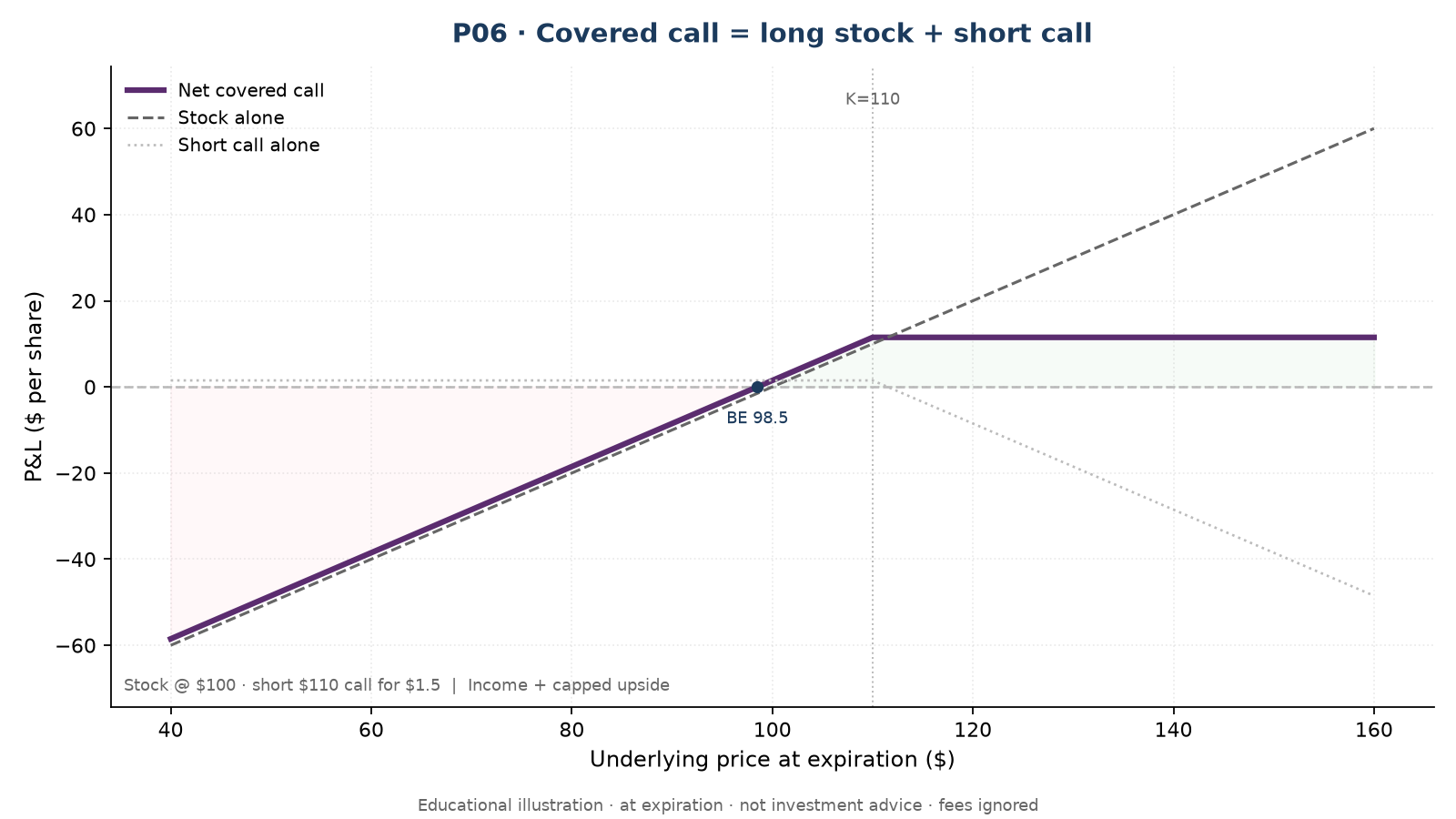
Willing seller → covered call
Rules:
- Strike = happy-sell (thrilled to sell that slice).
- Cover only shares you can part with; leave a core-keep uncalled.
- Prefer liquid lines; skip tip-money premium after fees.
- Unit = 100 shares per contract.
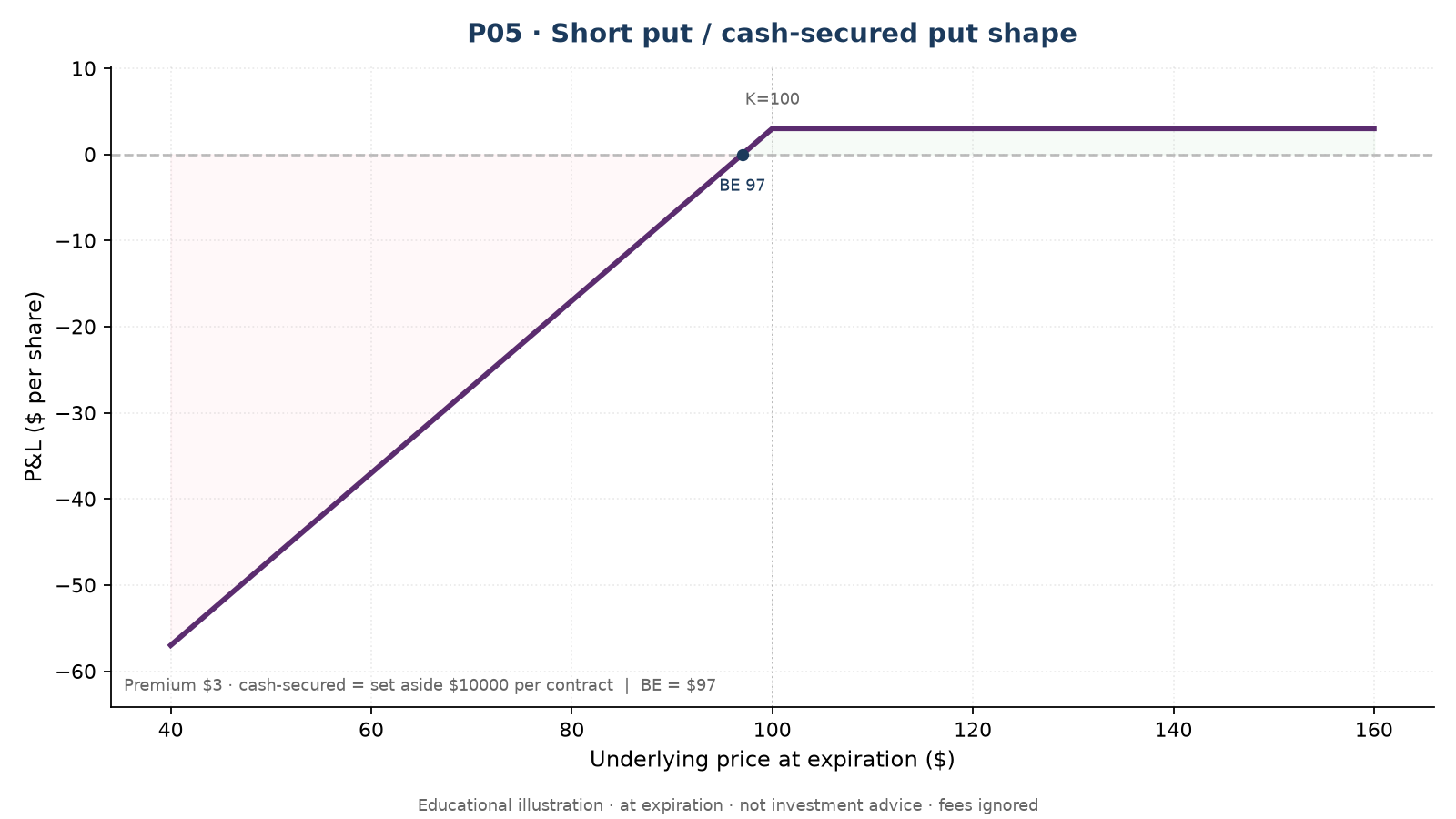
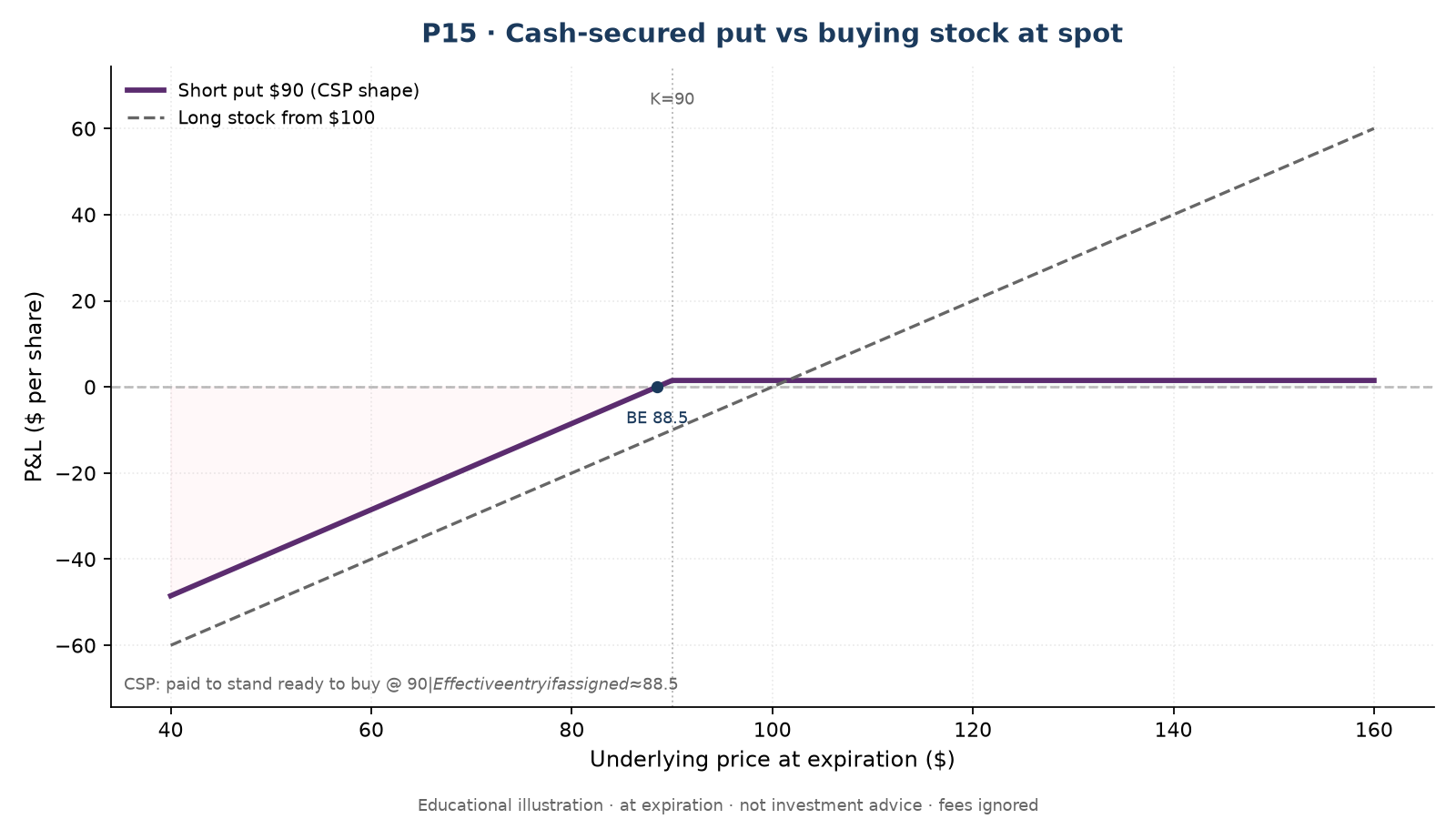
Willing buyer → cash-secured put
Rules:
- Strike = happy-buy (re-underwrite ownership at that price).
- Cash set aside for full assignment.
- Cap total CSP collateral so cash floors for fat-pitch buying survive.
- Skip "maybe I want it."
Rails (examples — set your own)
| Rail | Example level | Bias |
|---|---|---|
| Soft single-name | ~7.5% of book | Prefer harvest/trim plan |
| Hard single-name | ~8% | Trim or cover slice; log if holding |
| Core-keep | e.g. never call last 300 of 600 sh | Thesis floor |
| CSP collateral | Cap vs cash floor policy | Don't eat powder |
These numbers are illustrative from a real operator book style — not law for your account.
Explicit non-arms
Write them before you open the chain:
- Lottery far-OTM weeklies for tip money
- Puts on names you do not want
- Covering 100% of a conviction compounder "for income"
- Second contract without re-checking willing + rails
- Anything you cannot explain in one DecisionLog paragraph
DecisionLog (minimum fields)
Date:
Name / side (CC or CSP):
Strike / expiry / contracts:
Why willing (buy or sell test):
Core-keep or collateral:
Credit gate / skip if:
Early BTC policy:
Non-arms this week:
No log → no order (paper or live).
See Through It: "I sell premium on everything"
That is an options income fund identity. This course is an equity operator with an overlay. Different sport.
Takeaways
- Identity first: willing both sides.
- CC = sell high with rent; CSP = buy low with rent.
- Rails and core-keep prevent sizing creep.
- Non-arms are skill.
- DecisionLog before tickets.
Next: harvest and entry playbooks with concrete ticket fields.
Homework
Chapter 9 Homework — Overlay (20 pts)
- (3) Write your identity one-liner (willing both sides).
- (4) Define willing seller and willing buyer with matching tools.
- (4) Invent rails: soft %, hard %, core-keep rule, CSP collateral cap.
- (3) List five non-arms.
- (3) Fill a DecisionLog for one fictional CC (all fields from chapter).
- (3) Why is "sell premium on everything" a different sport?
Lab
Lab #9 — Overlay Policy v1
Chapter 9 Time: 35–50 minutes Educational only
Goal
Build Overlay Policy for a toy portfolio.
Setup
5 fictional names + cash % (your invent numbers).
Tasks
For each name: happy-buy, happy-sell, core-keep, coverable shares, CSP collateral budget if any. Write identity one-liner, rails, forbidden list, non-arms this month.
Deliverable
Policy sheet (reuse in Ch12).