Options for Operators
Premium is rent. Marks are weather. Process is the grade.
Educational only. Not investment advice. Fictional names. No live broker and no real account.
Syllabus · Open week 6 on the desk · Lab · Previous · Next
Chapter 6: The Strategy Map (Literacy, Not a Menu)
Options for Operators · Chapter 6 Big idea: Know the zoo so you are not sold the zoo. Default to four tools.
Educational only. Not personalized investment advice. All charts at expiration, toy S=$100 world.
Strategy YouTube is a buffet. This course is a toolbox with four tools on the top tray and a locked drawer of things you can name but rarely use.
Core four (operator default)
1. Covered call — willing seller
Own stock + short call at a happy-sell strike.
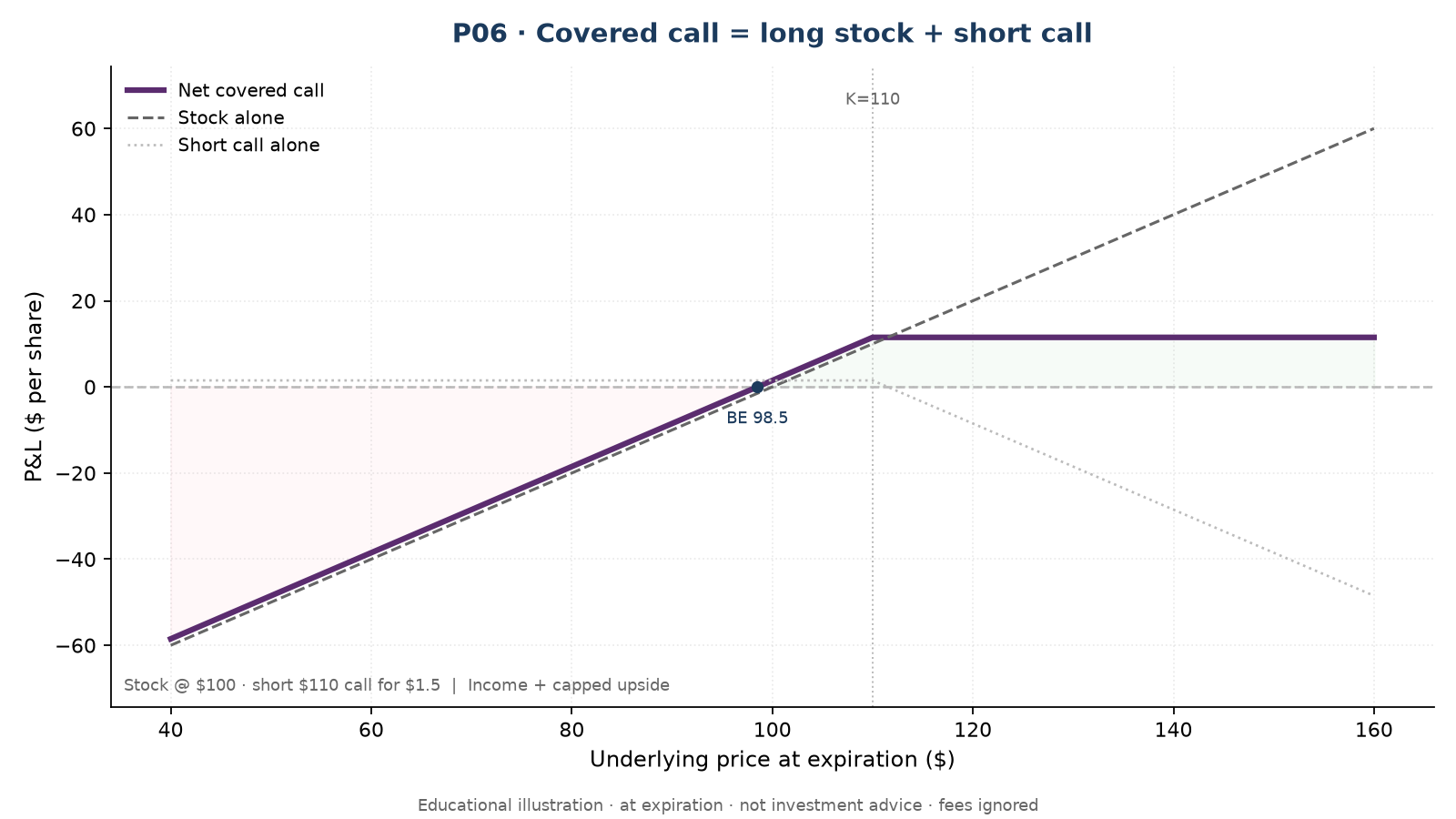
Income + soft-cap. Downside is still mostly the stock.
2. Cash-secured put — willing buyer
Short put + cash to buy shares if assigned.
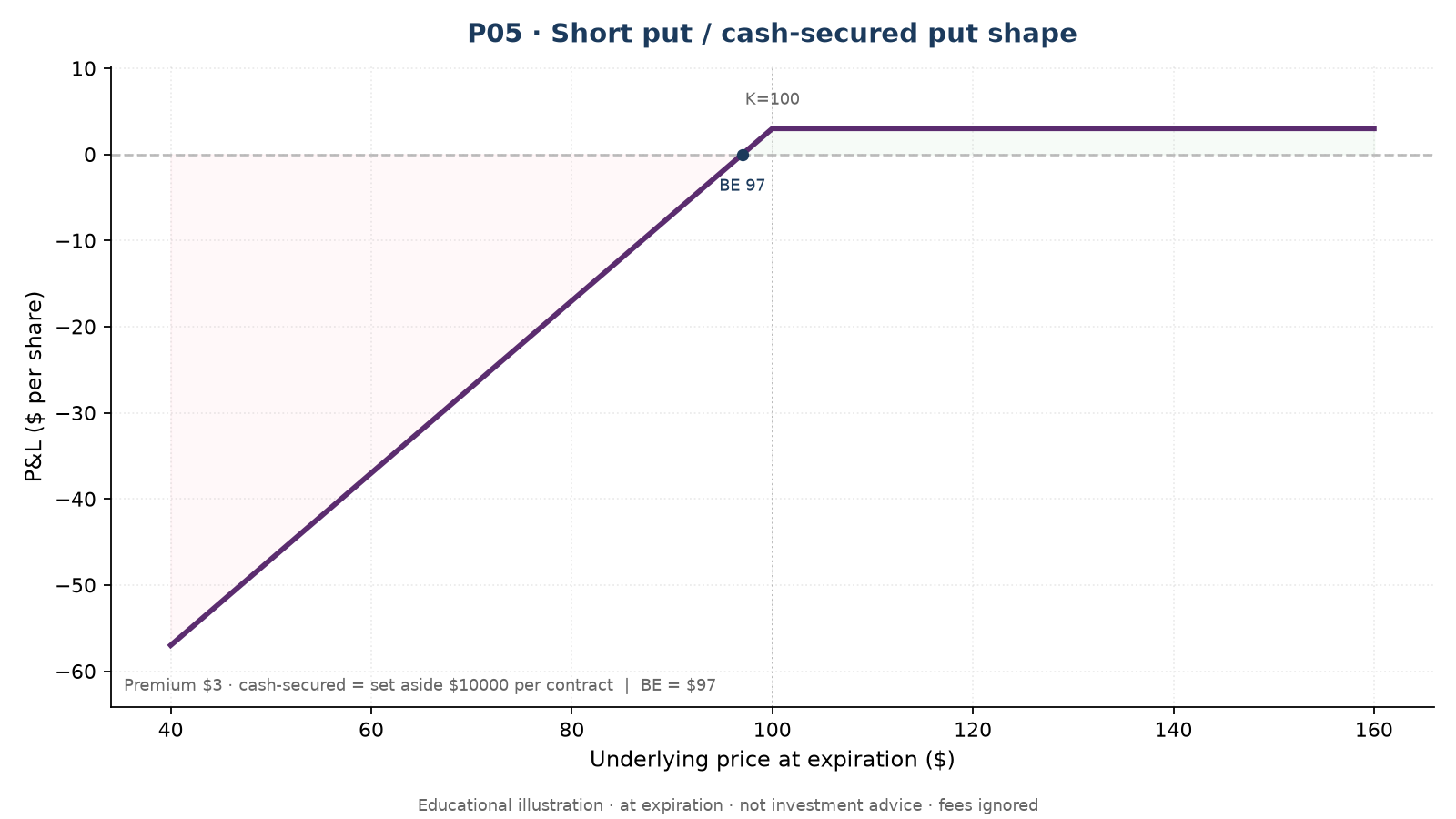
Paid entry. Only if you want the stock at that effective price.
3. Protective put — floor
Own stock + long put.
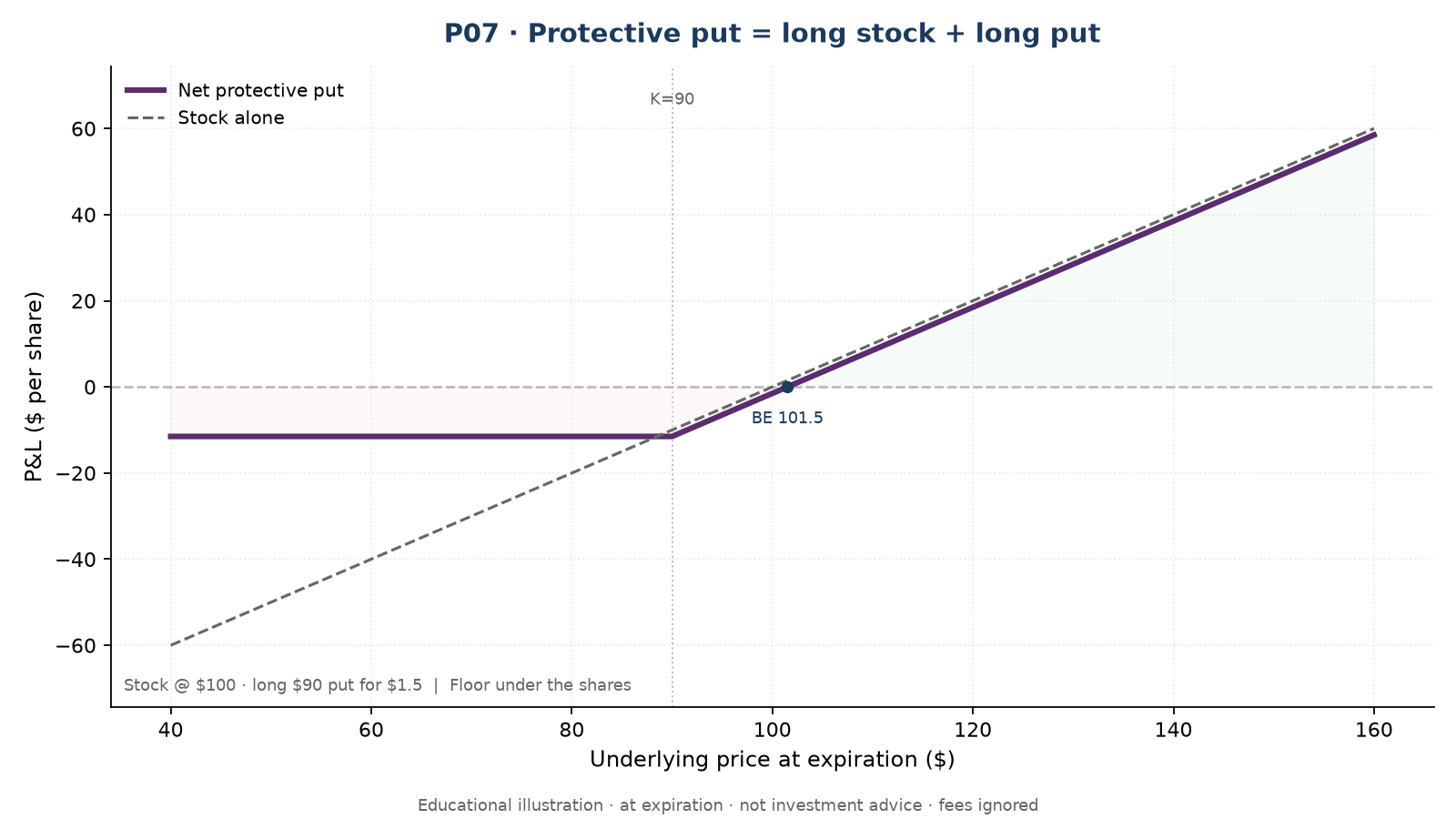
Insurance cost is the premium. Sleep has a price.
4. Collar — floor financed by cap
Stock + long put + short call.
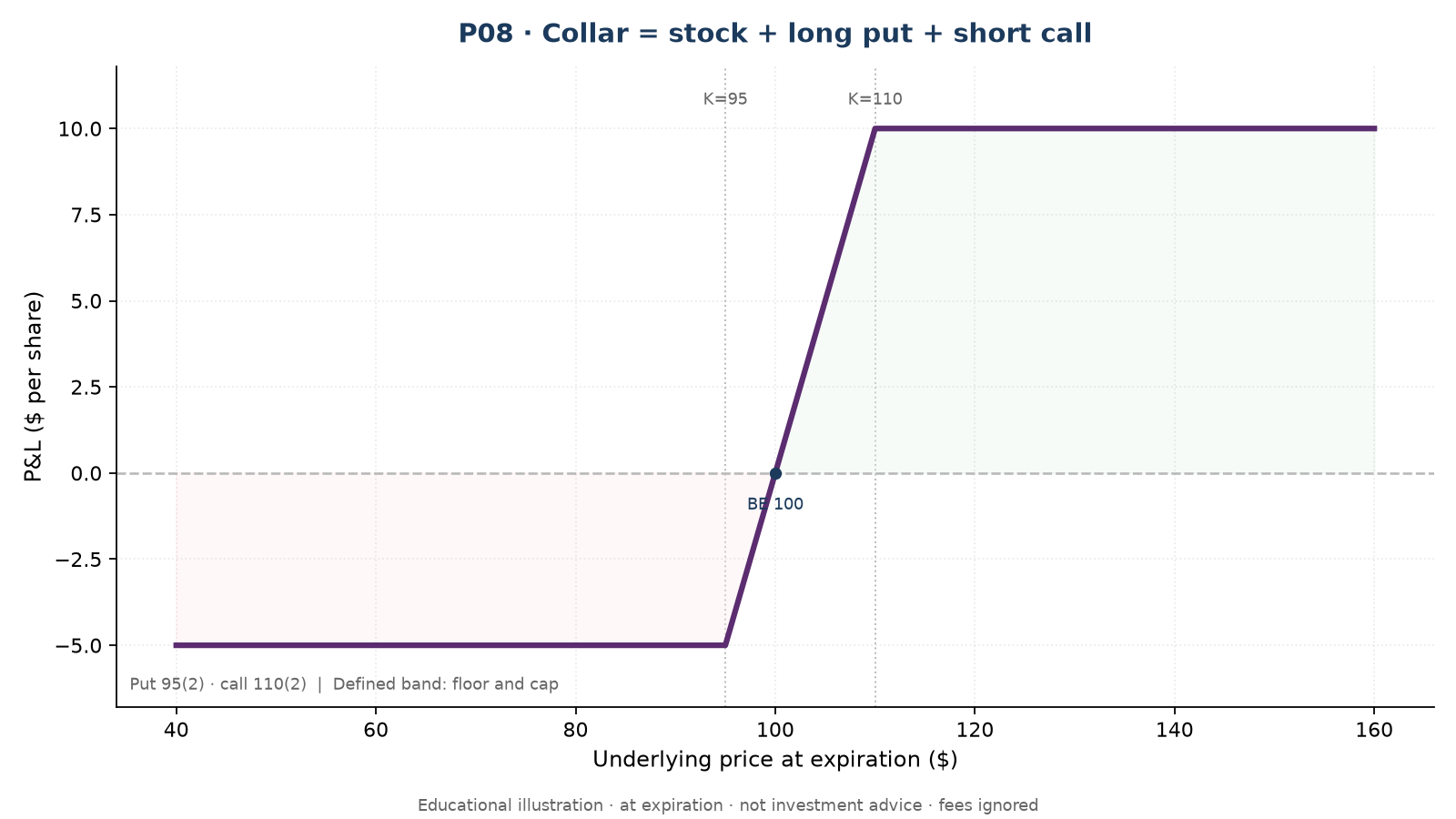
Defined band. You traded away some upside to pay for the floor.
Building blocks (so the zoo makes sense)
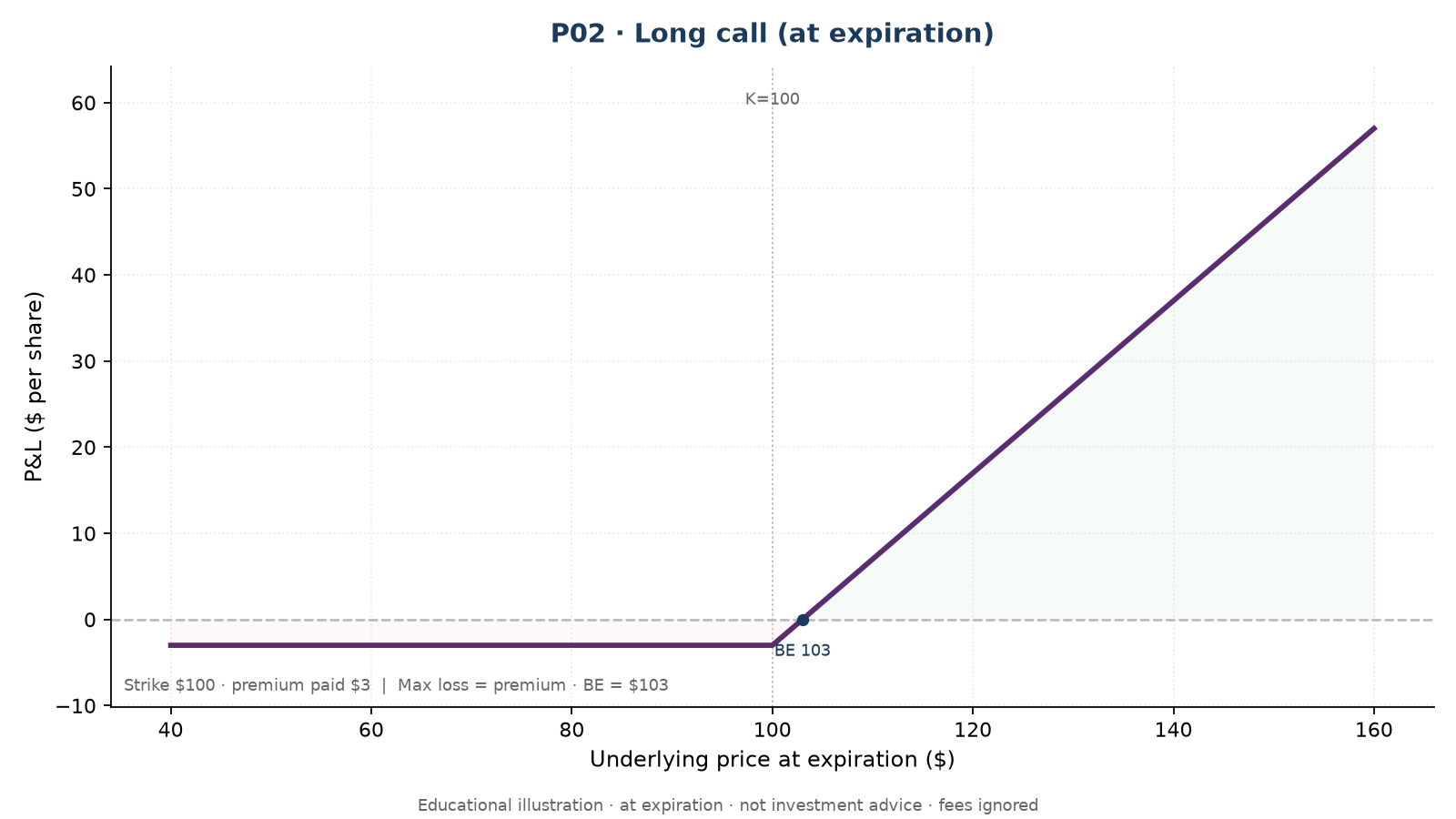
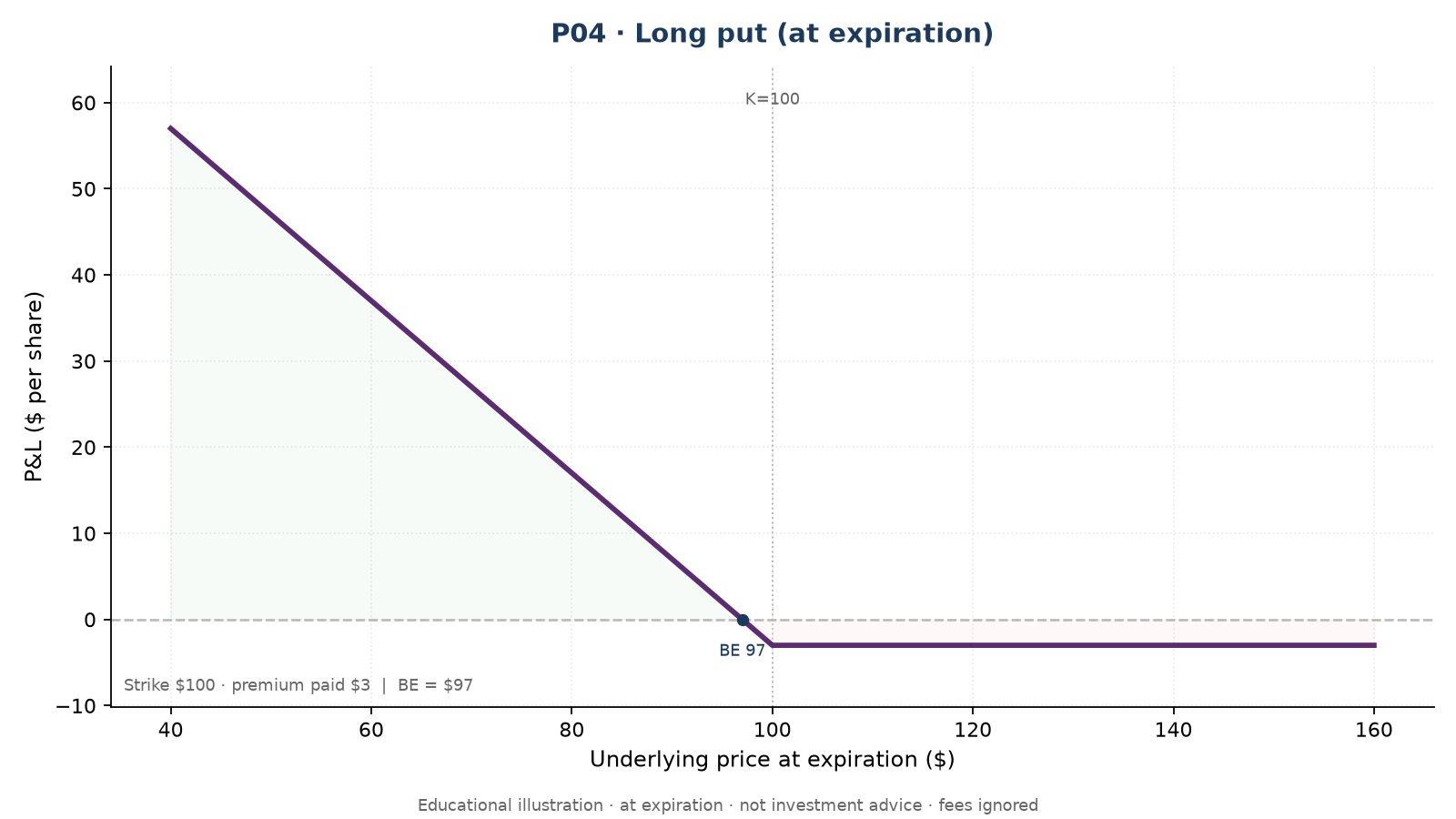
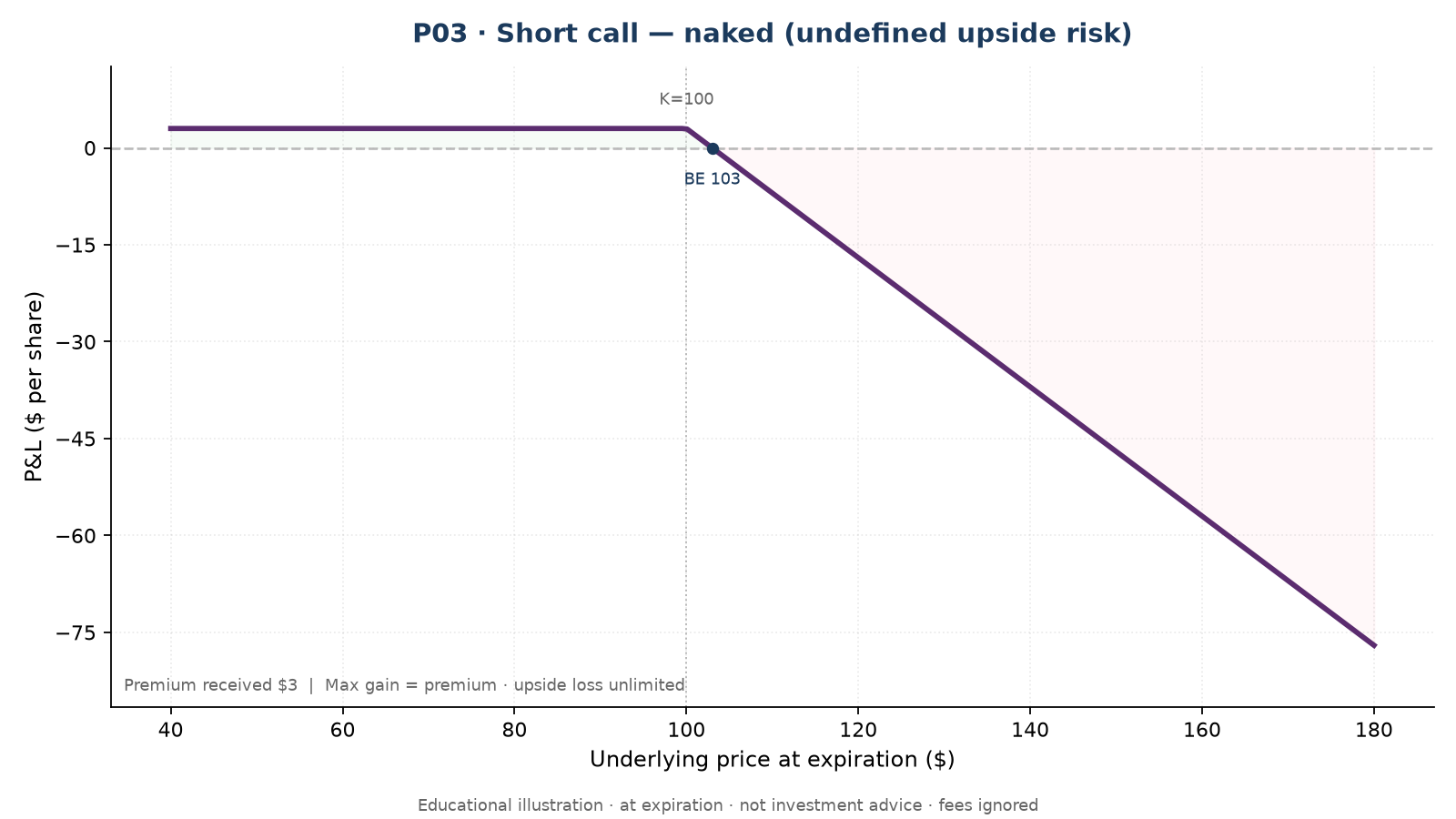
Naked short call: undefined upside risk. Not an income product in this course.
Defined-risk directional literacy
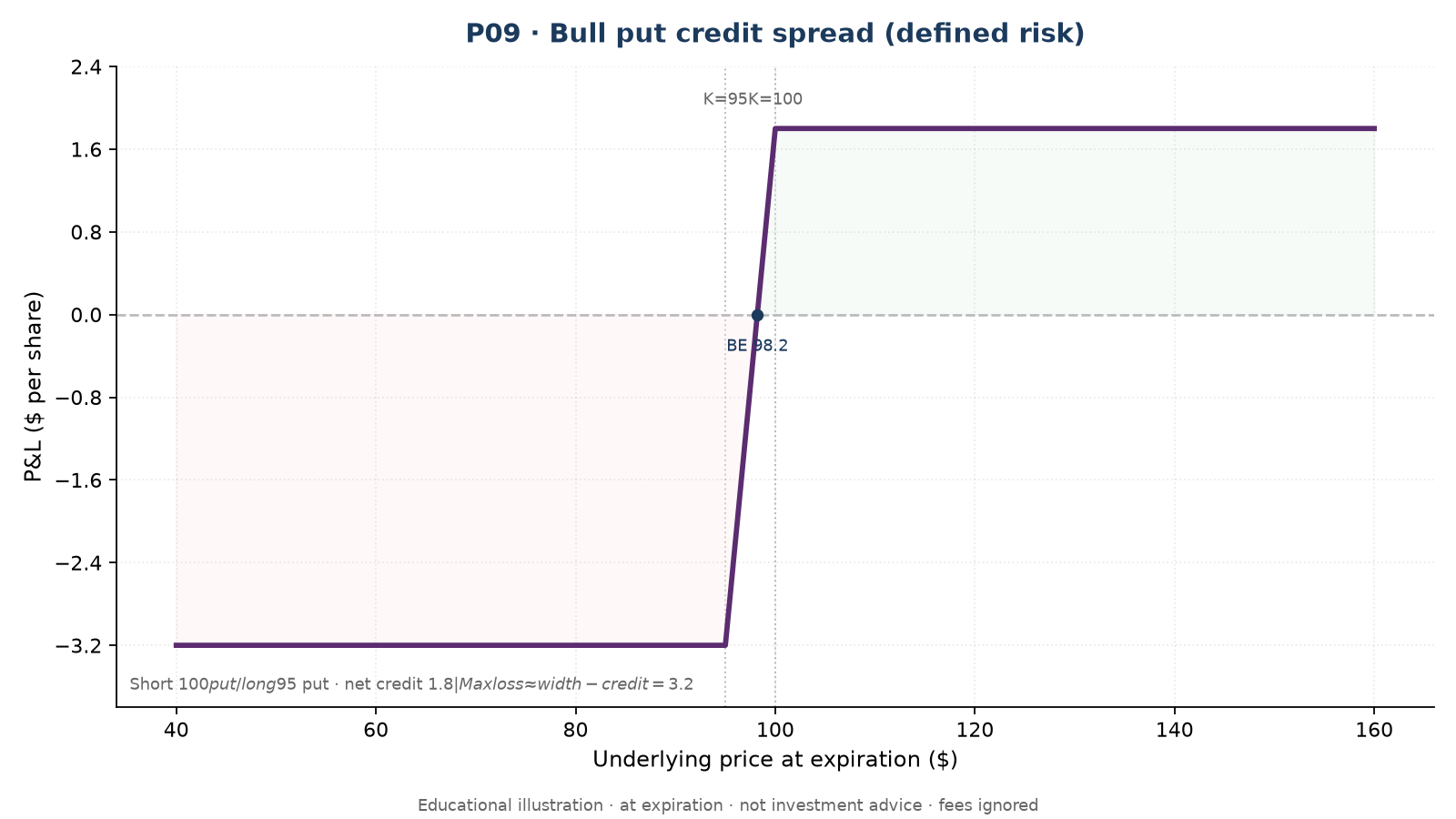
Bull put credit spread
Short higher put + long lower put. Credit if stock stays above short strike. Wings cap the disaster.
Bear call credit spread
Short lower call + long higher call.
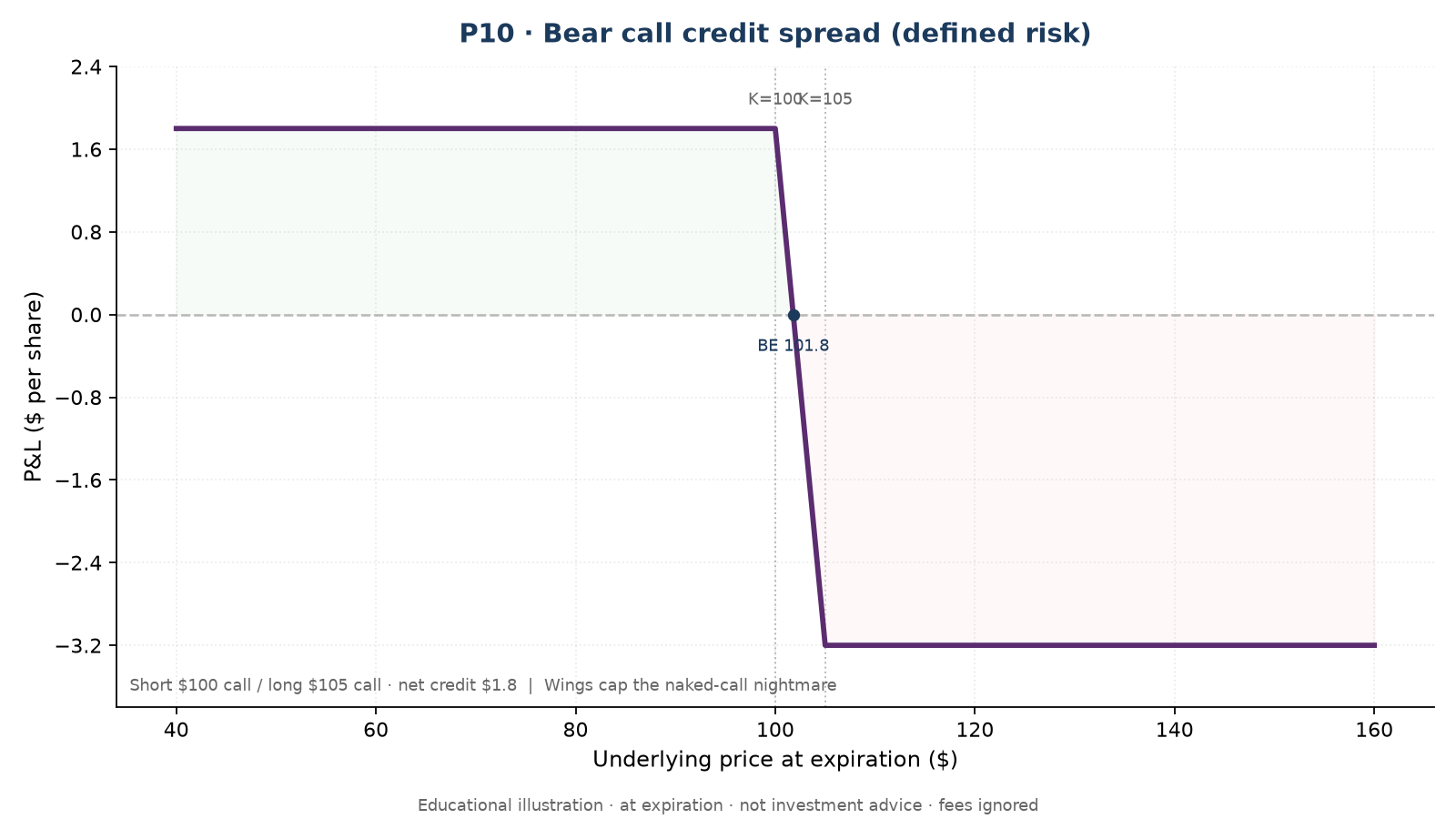
Use case in this course: recognize them; rarely prefer them over CSP/CC when you actually want stock decisions.
Volatility shapes (literacy)
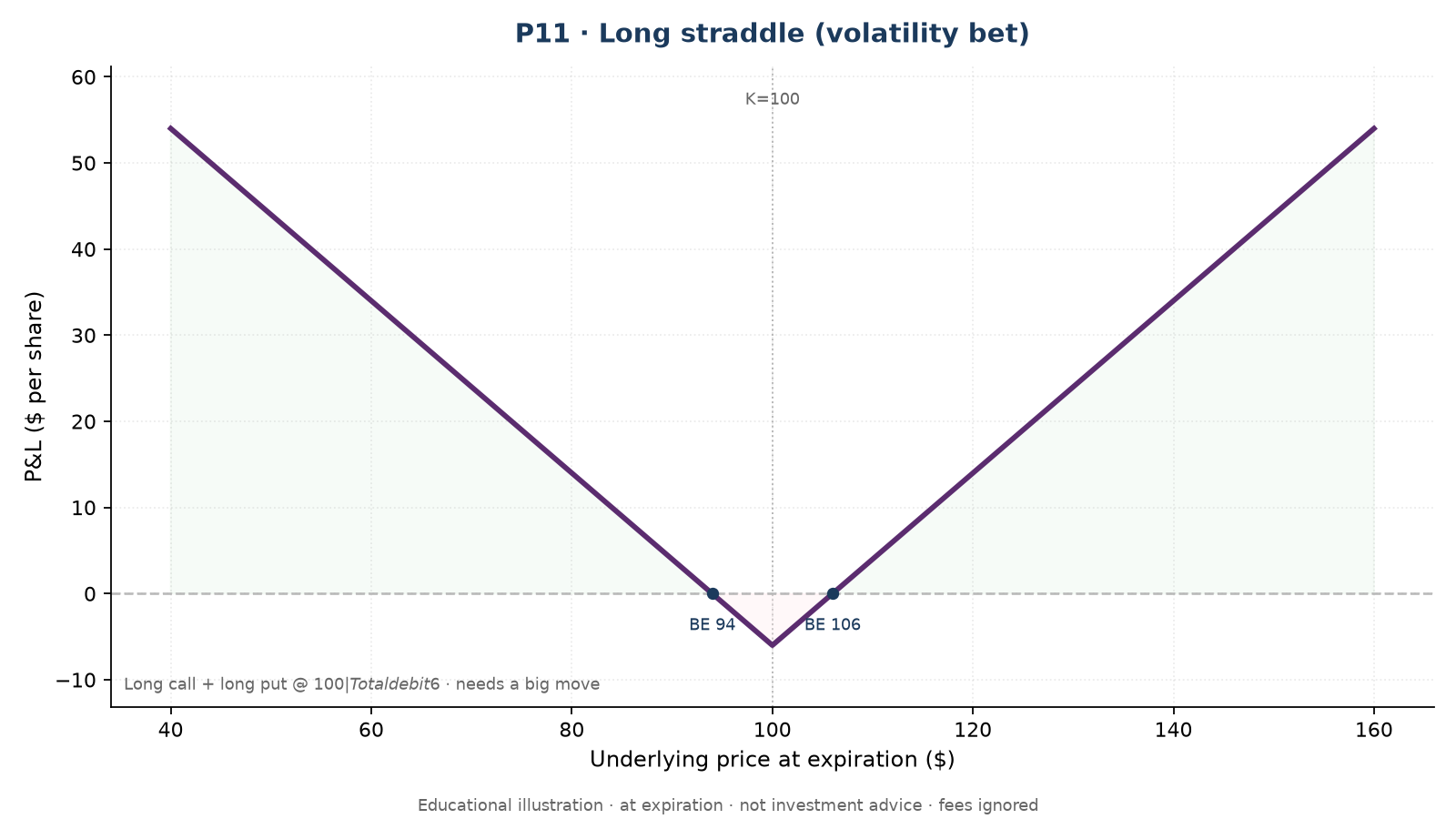
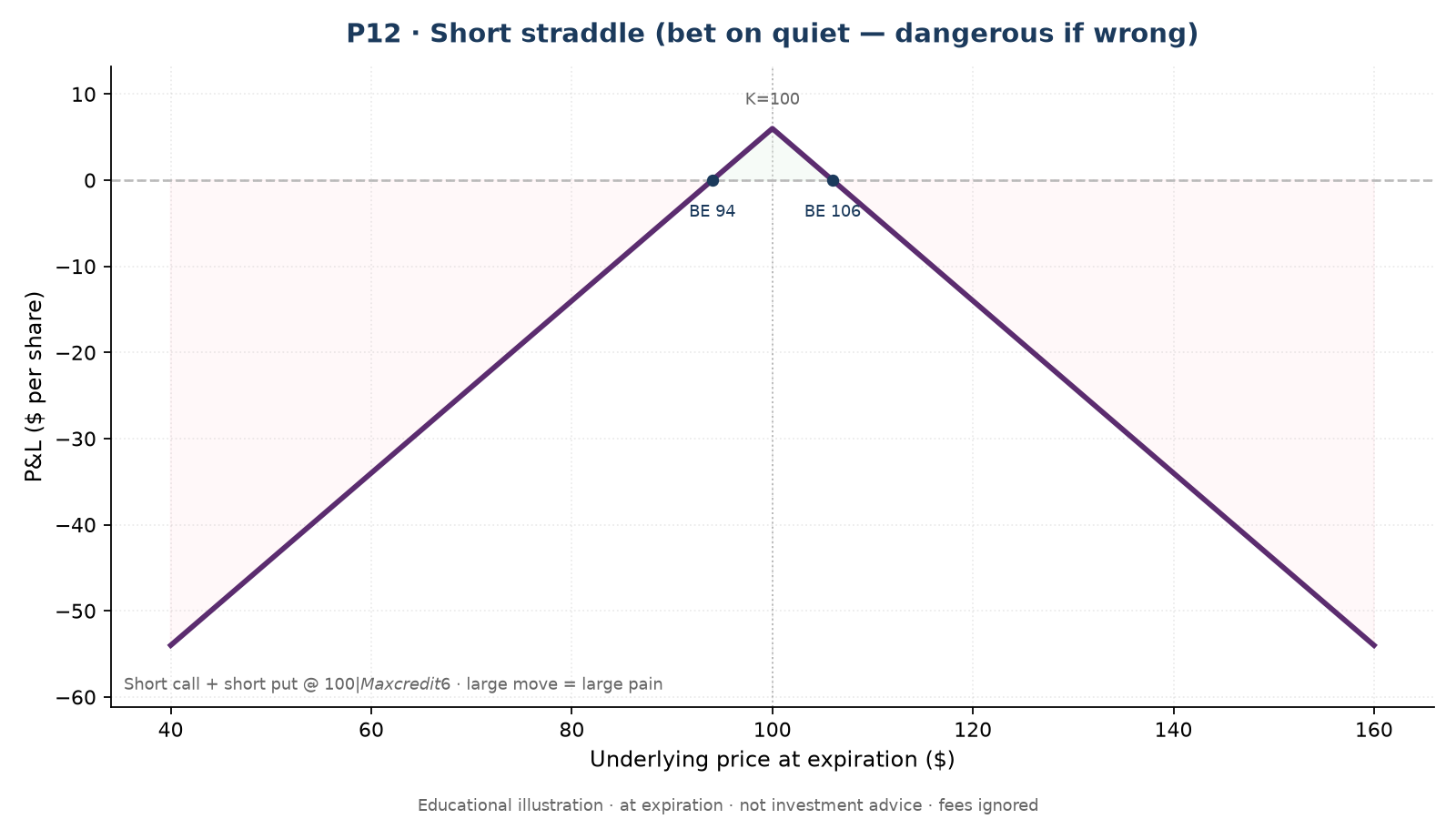
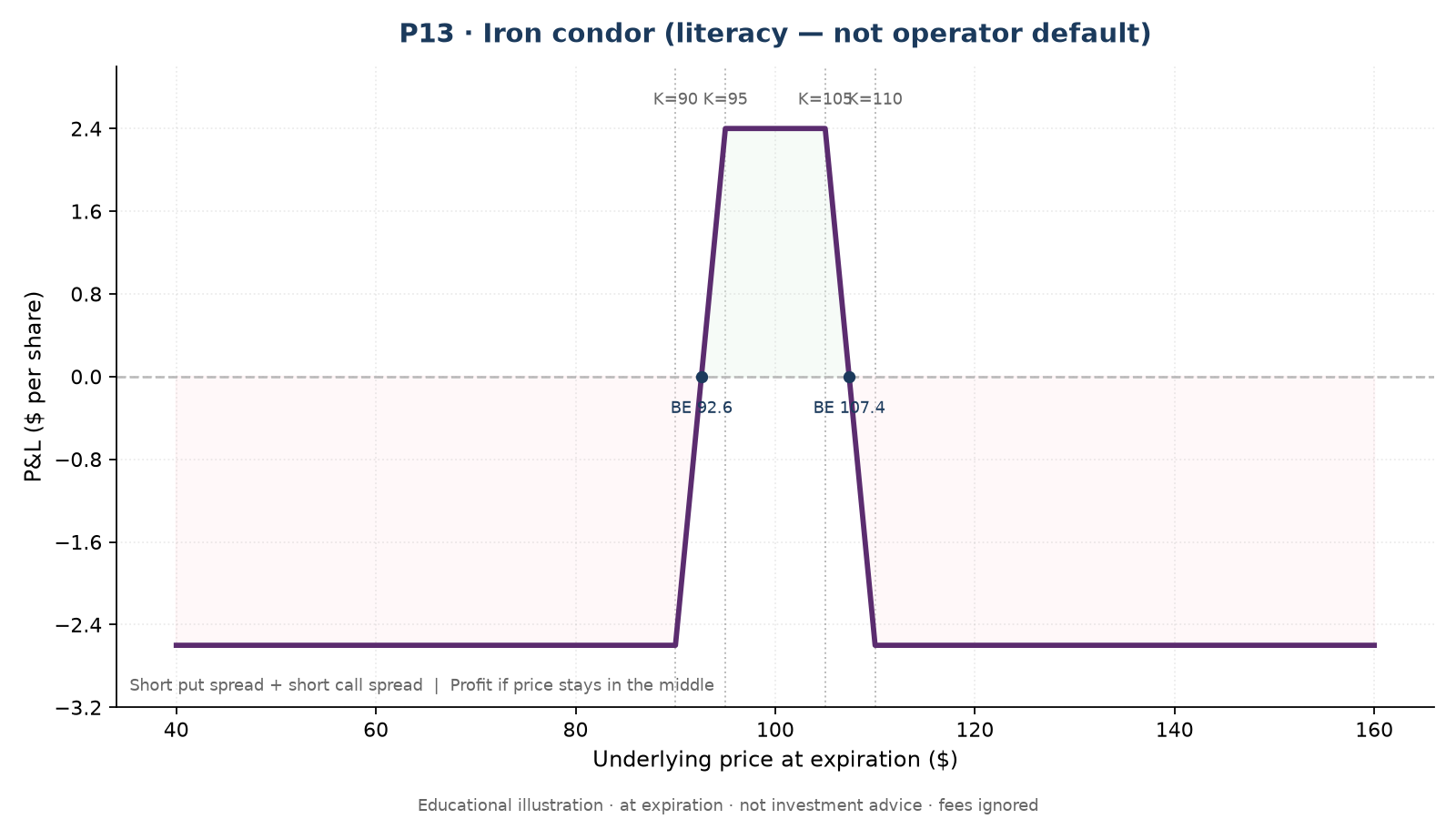
Iron condor = short put spread + short call spread. Profit if price stays middle. Influencer favorite. Operator default? No — unless you have a process that survives short gamma on both sides (most students do not).
Classification table (memorize the questions)
For every structure ask:
| Question | Why |
|---|---|
| Outlook? | Bull / bear / quiet / storm |
| Max gain? | Capped or open? |
| Max loss? | Defined or ruin-shaped? |
| Capital? | Cash, shares, margin story? |
| Stock decision? | Or pure option P&L theater? |
If max loss is undefined and the pitch is "income," walk away.
See Through It: complexity as product
Four-leg structures look professional. Sometimes they are risk-defined and honest. Sometimes they exist so the pitch can say "defined risk" while the real product is attention and commissions. Complexity is not virtue.
Takeaways
- Core four: CC, CSP, protective put, collar.
- Spreads/straddles/condors: literacy first.
- Naked short call: anti-pattern for income.
- Always state max loss and stock decision.
Next: assignment reality — when the promise becomes shares.
Homework
Chapter 6 Homework — Strategy Map (20 pts)
- (4) List core four with one-line job each.
- (2) Why is naked short call an anti-pattern here?
- (3) For each: covered call, CSP — max gain shape (capped/open) and main leftover risk.
- (3) Bull put spread vs naked short put: what does the long put wing buy you?
- (2) Iron condor max profit zone (concept).
- (4) For long straddle and collar: one sentence each "I would only use this if…"
- (2) See-Through: how does complexity become a product?
Lab
Lab #6 — Strategy Classification Matrix
Chapter 6 Time: 35–50 minutes Educational only
Goal
Classify 8 structures.
Columns
Structure | Outlook | Max gain | Max loss defined? | Capital need | Allowed in my OS? (Y/N/literacy only)
Structures
Long call, short naked call, CSP, covered call, protective put, collar, long straddle, iron condor
Deliverable
Completed matrix + one sentence: "I would only use iron condor if…"