Options for Operators
Premium is rent. Marks are weather. Process is the grade.
Educational only. Not investment advice. Fictional names. No live broker and no real account.
Syllabus · Open week 11 on the desk · Lab · Previous · Next
Chapter 11: Insurance, Collars, and Anti-Patterns (Graveyard)
Options for Operators · Chapter 11 Big idea: Sometimes the right option is protection — or no trade.
Educational only. Not personalized investment advice.
Not every tool is a covered call. Not every week needs a ticket.
Protective put — cost of sleep
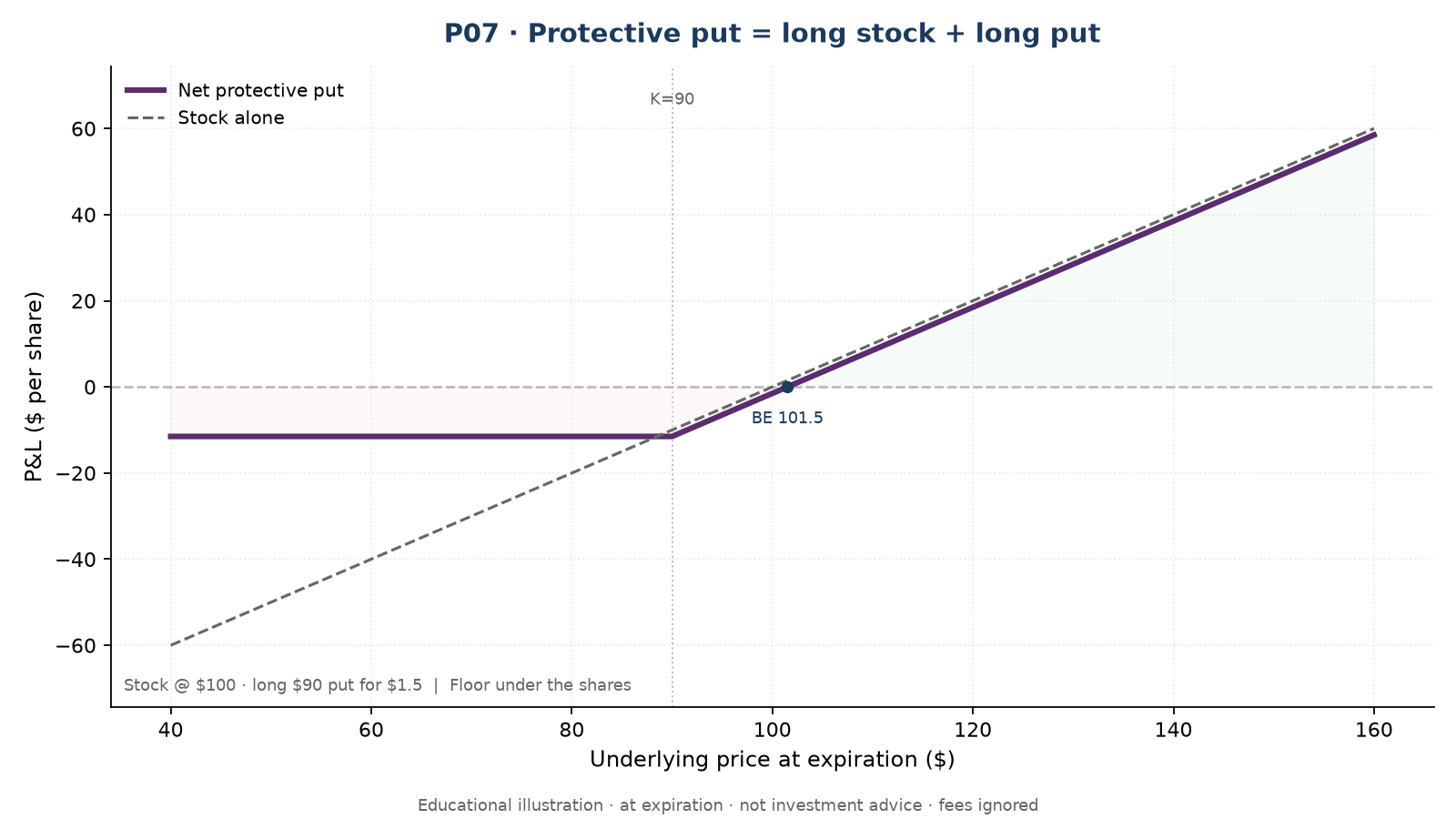
Own stock + long put = floor. You pay premium (and usually theta). Use when:
- A concentrated name must stay held for non-price reasons, and
- A defined floor matters more than max upside, and
- IV is not so rich that the floor costs the whole thesis (or you accept that cost consciously).
Collar — finance the floor by selling upside
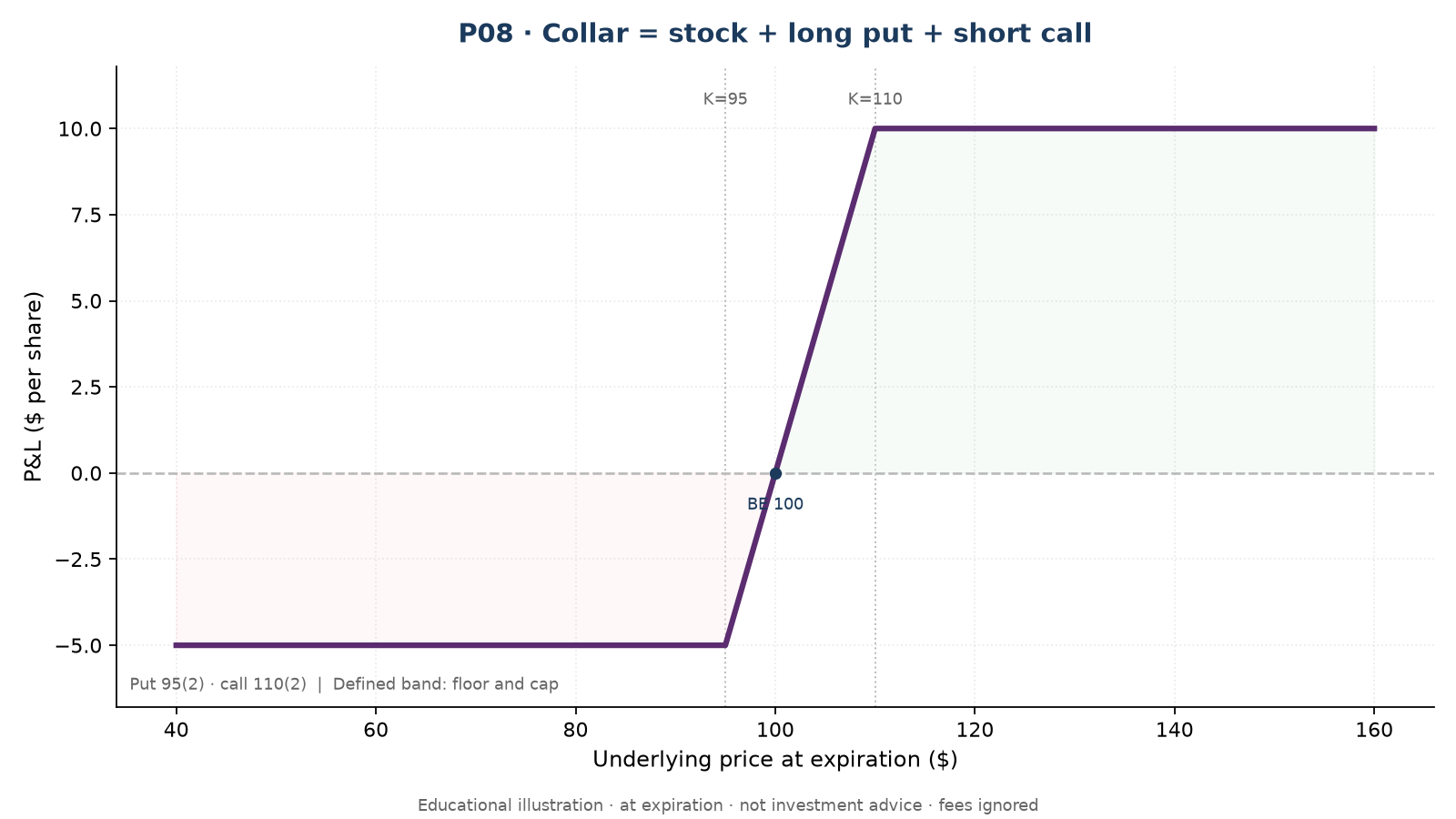
Long put paid partly/fully by short call. You accept a band. Good when you need downside limits and can live with a cap. Bad when you collar a name you still need unlimited upside from without admitting it.
Index puts (literacy)
Portfolio-level hedges exist (index puts/collars). They are a different product from single-name process strikes. Mentioned so you recognize them; not this course's default homework.
Graveyard of operator sins
1. Premium with no stock decision
Short anything for "income" without happy-buy/sell. Chart may look pretty. Process is empty.
2. Managing marks instead of thesis
Panic-BTC underwater OTM shorts that still match the plan. Weather worship.
3. Sizing into ruin
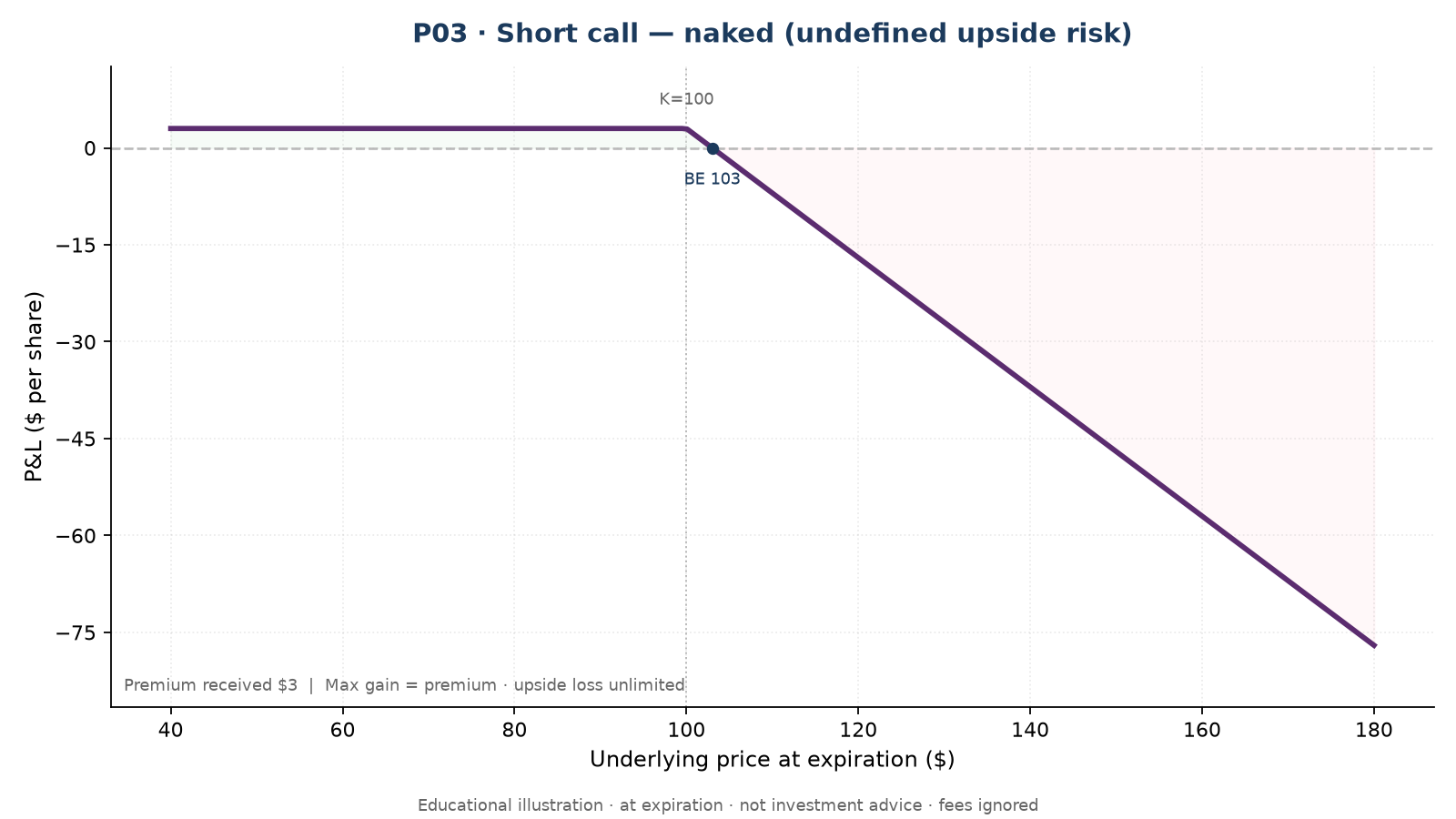
Undefined risk sold as income. Or too many CSPs vs cash floor so a crash forces bad sales of excellence elsewhere.
4. Covering compounders just for coupons
Calling away the whole conviction core because premium looked free. You sold the business for rent.
5. Rolling losers without a new DecisionLog
Extending pain to avoid being wrong on paper.
6. Short vol as lifestyle
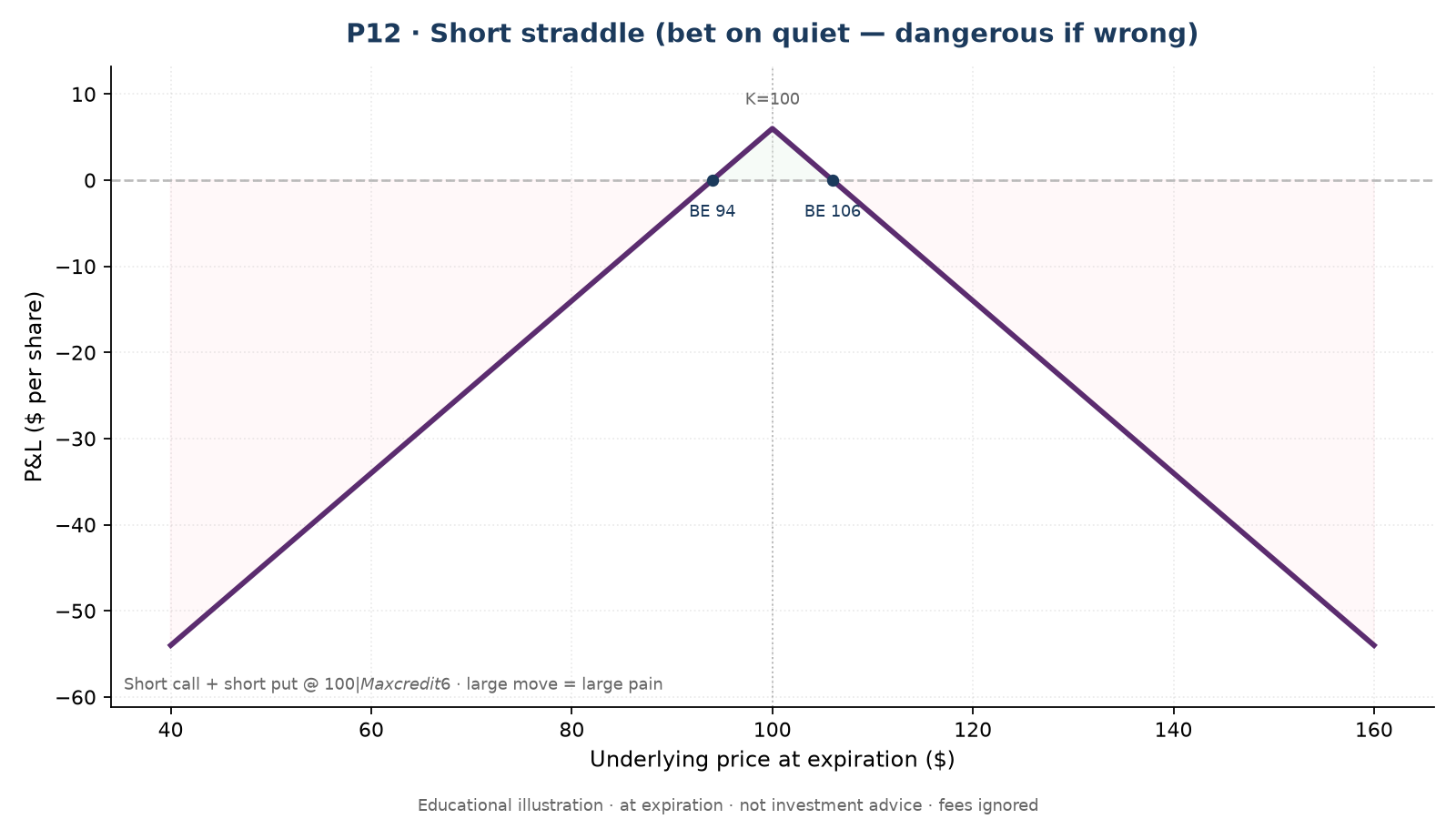
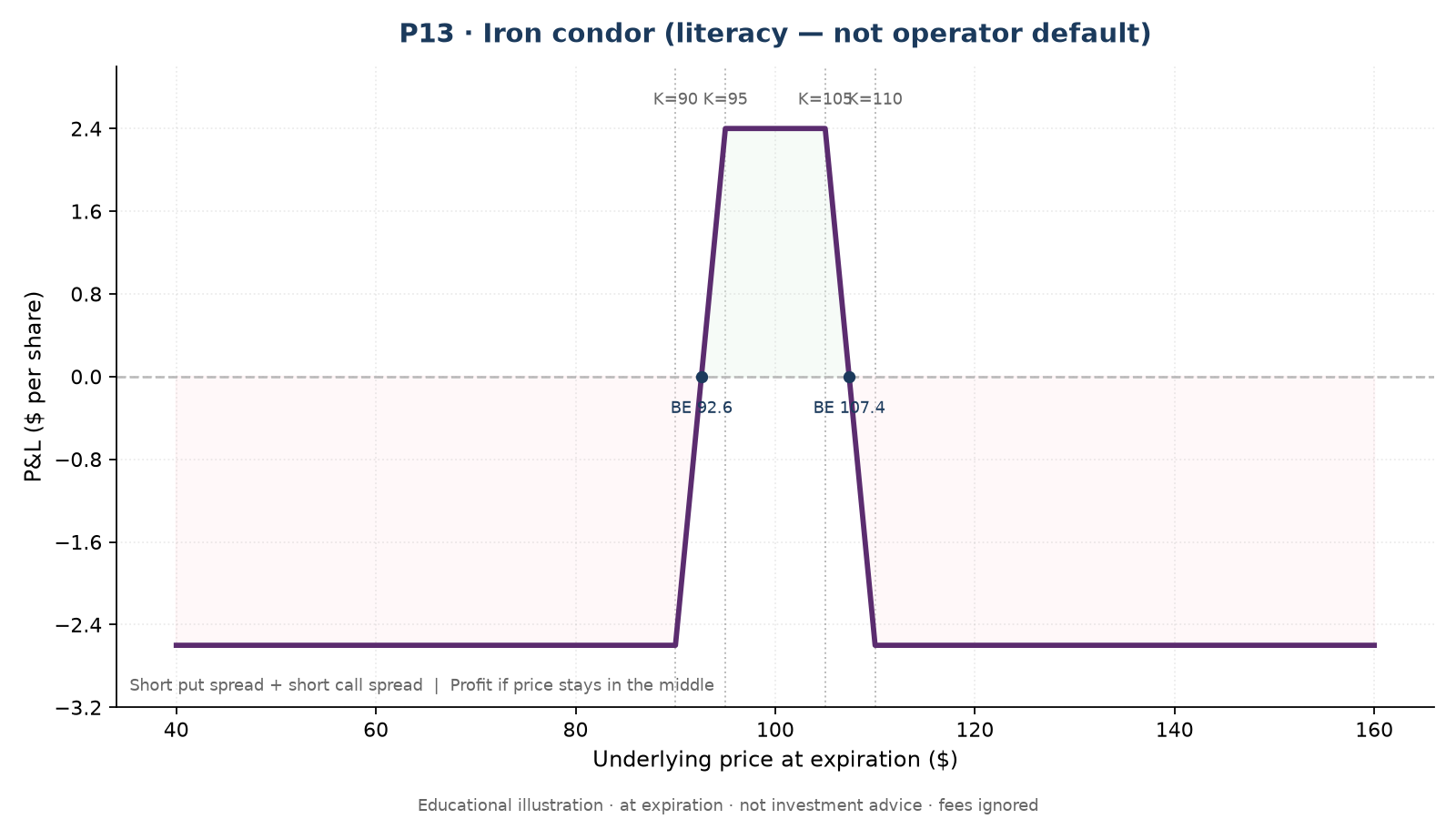
Calm markets pay. Storms invoice. Without a true edge and risk system, this is a lifestyle brand, not an OS.
Crisis pattern (from Advanced Finance) on a personal options book
Innovation (new strategy) → leverage (size up) → overconfidence (win-rate stories) → collapse (gap/assignment cascade) → regulation (your own stricter rails — if you survive).
Write your rails before the invoice.
Cash floor / fat-pitch powder
Options must not eat the ability to buy excellence in a drawdown. CSP collateral and margin habits that drive cash to zero fail the operator test even if every short expired green last quarter.
Pre-mortem habit
Take any hot influencer ticket. Ask:
- Stock decision?
- Max loss in dollars?
- What if IV doubles?
- What if assigned tomorrow?
- Does this violate core-keep or cash floor?
If any answer is shrug → no trade.
Biblical thread: surety
Co-signing and casual guarantees destroy households in Proverbs. Short options are contingent guarantees. Get paid only when the guarantee matches a decision you already own — and size it so ruin is not on the table.
Takeaways
- Puts and collars are real tools for floors.
- No trade is a valid operator output.
- Graveyard sins are process failures, not bad luck.
- Protect fat-pitch cash.
- Pre-mortem influencer tickets.
Next: capstone — your Options Operating System.
Homework
Chapter 11 Homework — Insurance & Graveyard (20 pts)
- (3) Protective put: what you buy and what you pay for.
- (3) Collar trade-off in one sentence.
- (6) Name four graveyard sins; one sentence each.
- (4) Pre-mortem the ad: "Weekly short straddles for income."
- (2) How do options threaten fat-pitch cash?
- (2) Reflection: which sin is your personal risk?
Lab
Lab #11 — Influencer Pre-Mortem
Chapter 11 Time: 35–50 minutes Educational only
Goal
Break a hot structure with rails.
Tasks
- Take a fictional ad: "Iron condor on SPY every week for income!"
- Run pre-mortem questions from Ch11.
- Rewrite into either no trade or a willing-both-sides equivalent (if possible).
- List which graveyard sin the original commits.
Deliverable
One-page pre-mortem.